Start with a shared purpose
VIVID PRO and VIVID PRO MAX are clear high-gloss paint protection films. Both are intended for owners who want to retain a glossy view of the underlying paint while adding a protective surface. The decision between them is a construction choice within that purpose. It is not a choice between gloss and matte, or between transparent and colored film.
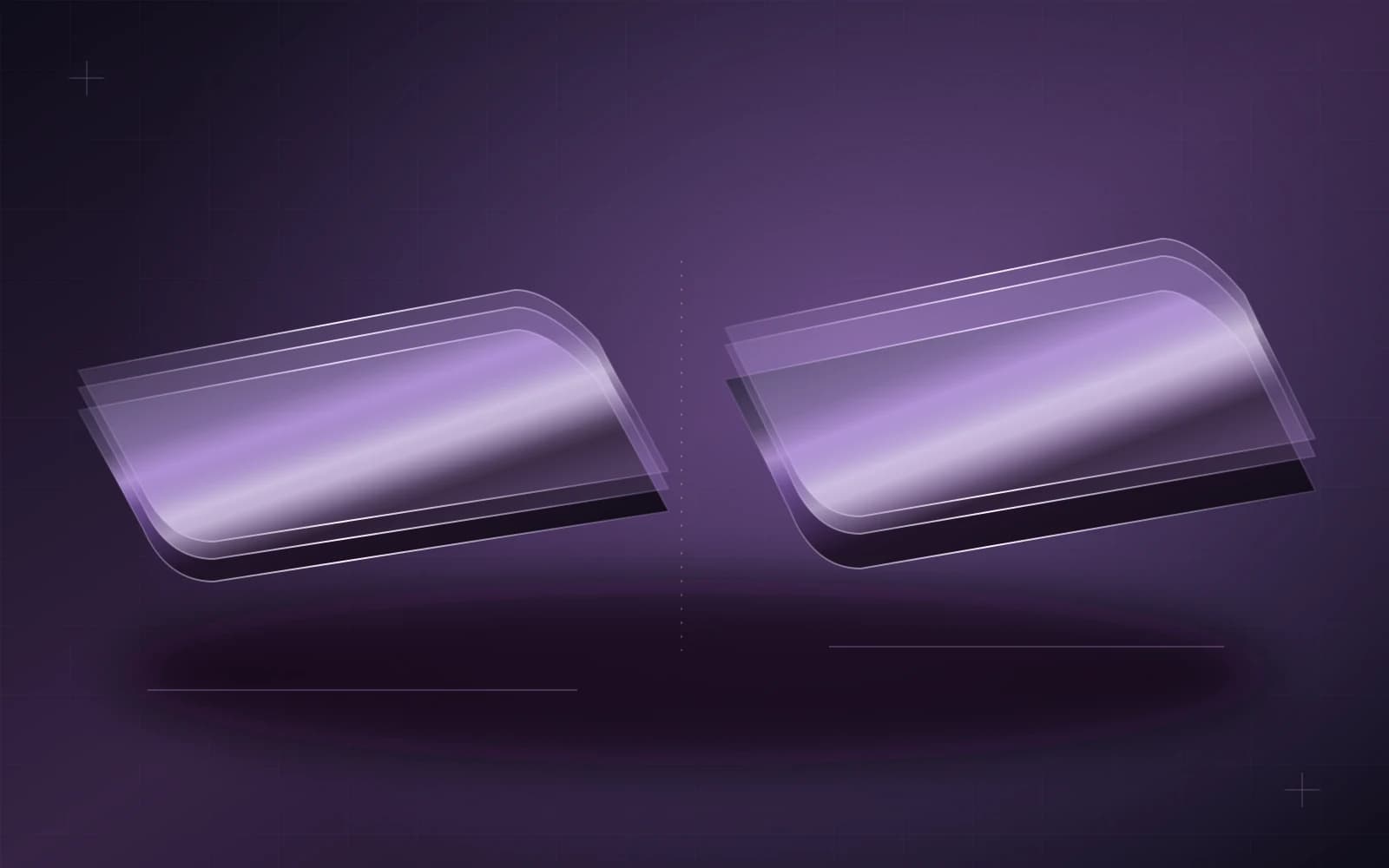
PRO offers a documented 7.5 mil construction. PRO MAX moves to 8.5 mil and occupies the flagship maximum-protection position in the current clear VIVID range. The useful comparison is therefore specific: where is the additional material, what do the documented mechanical ranges show, and how does that relate to the job being planned?
The specification side by side
| Property | VIVID PRO | VIVID PRO MAX |
|---|---|---|
| Current documented finish | Clear high-gloss | Clear high-gloss |
| Total thickness | 7.5 mil | 8.5 mil |
| Top coat | 0.5 mil | 0.5 mil |
| TPU core | 6.0 mil | 7.0 mil |
| Optical adhesive | 1.0 mil | 1.0 mil |
| Tensile strength | 45–55 MPa | 55–65 MPa |
| Elongation | 300–400% | 350–450% |
| Peel adhesion | 8–10 N/25 mm | 9–11 N/25 mm |
| UV protection | At least 99% | At least 99% |
| Technical durability | 7–10 years | 10 years |
The table is a comparison of documented product facts. Technical durability is not a commercial warranty. Confirm applicable warranty terms separately for the actual purchase and region.
Where the extra mil goes
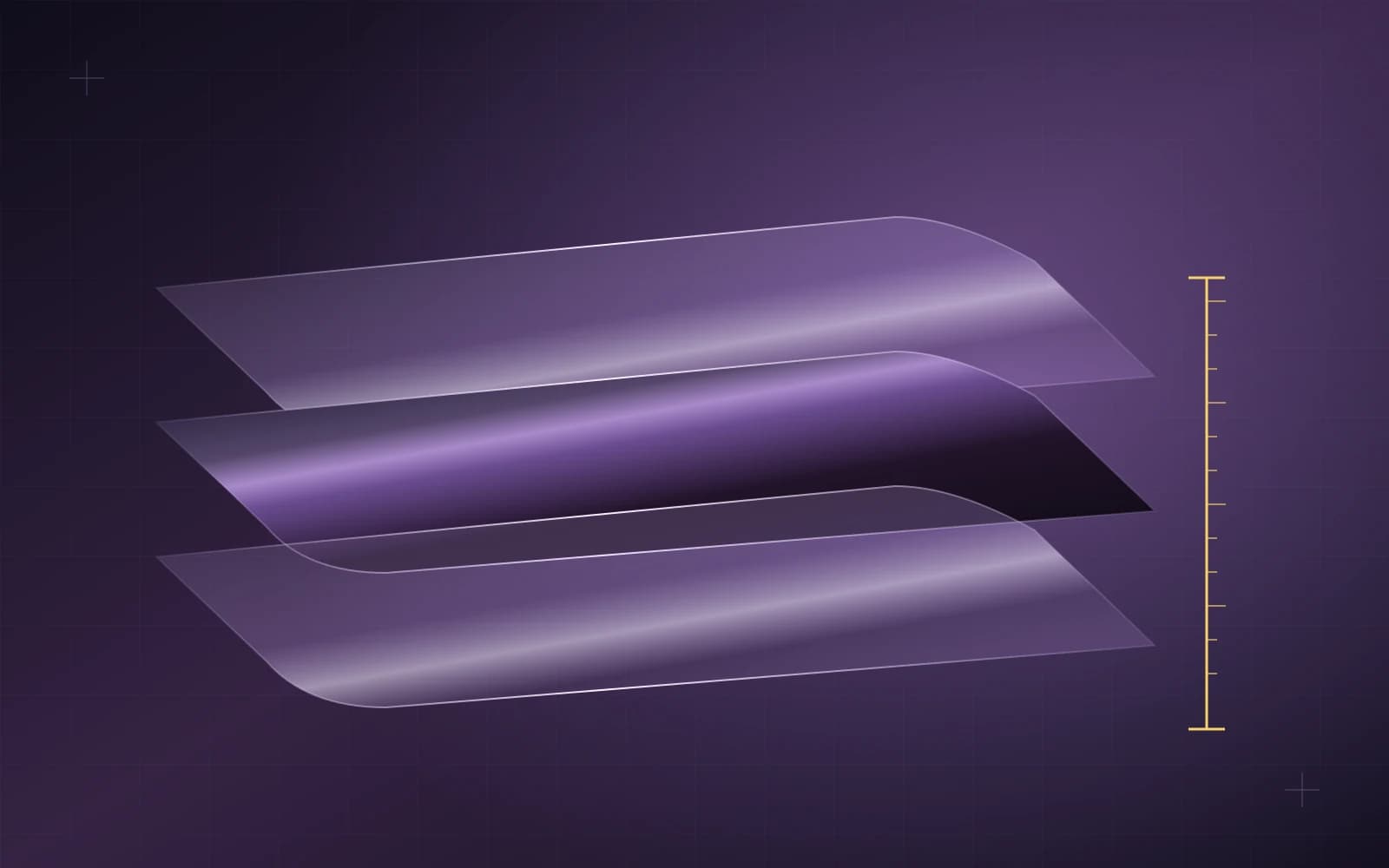
A mil is one thousandth of an inch. The difference between these complete constructions is 1 mil, or 25.4 micrometers. The documented increase is in the TPU core: 6.0 mil for PRO and 7.0 mil for PRO MAX. The top coat and adhesive remain 0.5 mil and 1.0 mil respectively in the published construction breakdown.
That detail is more informative than saying only that PRO MAX is thicker. It identifies the part of the material system receiving additional depth. It also prevents a misleading assumption that the adhesive has simply become thicker or that a shipping liner has been included in one number.
The extra material does not justify a homemade impact formula. Dividing 8.5 by 7.5 produces a thickness ratio, not a measured increase in protection. Real impacts vary in object shape, energy, angle and the surface beneath the film. No percentage reduction in damage is established by this comparison.
What the mechanical ranges tell you
Tensile strength
Tensile strength concerns the material under a pulling load. PRO's range is 45–55 MPa; PRO MAX's is 55–65 MPa. These values help distinguish documented mechanical performance. They are not a stone-impact test, a guarantee against tearing or a measure of the force that an entire installed vehicle panel can withstand.
Elongation
PRO documents 300–400% elongation and PRO MAX documents 350–450%. These values describe material extension under measurement conditions. They are not installation targets. An installer must preserve film thickness, finish and adhesive behavior while conforming the material to a vehicle. Stretching near a material's failure range is not a sensible reading of a product specification.
Peel adhesion
The peel ranges are 8–10 N/25 mm for PRO and 9–11 N/25 mm for PRO MAX. They describe a measured adhesive property, distinct from core strength. Substrate preparation still matters. A published adhesion value does not make contaminated, failing or poorly repaired paint an appropriate installation surface.
Match the film to a clearly defined job
A useful discussion starts with vehicle use and coverage. How frequently does the vehicle travel? Which panels receive the most exposure? Is the owner seeking front-area protection, full panels or a wider application? What appearance must remain visible? Those answers help establish the job before a product is selected.
PRO fits a plan seeking premium clear high-gloss protection with the documented 7.5 mil construction. PRO MAX fits a plan that prioritizes the flagship clear construction and its higher documented mechanical ranges. The choice should be supported by a professional assessment of the vehicle, the proposed coverage and the owner's priorities.
Budget also needs the right comparison. A quotation should specify product, coverage, preparation and finishing details. Two prices are not directly comparable if one includes full panels and the other covers only selected areas. The same principle applies when comparing a PRO installation with a PRO MAX installation.
Finish choices remain separate
The current documented PRO MAX finish is clear high-gloss. There is no PRO MAX Matte or PRO MAX Color variant in this comparison. If the desired result is matte, evaluate VIVID PRO MATTE™. If the owner wants color and texture personalization, evaluate VIVID PRO SHIELD COLOR™.
Selecting an unsuitable finish simply because a different product has a larger thickness number solves the wrong problem. Appearance and construction should both meet the brief. Read Gloss vs Matte PPF when the visual objective is still undecided.
Installation and ownership still count
Neither product makes paint preparation optional. Inspect the surface, agree any corrective work, identify boundaries and document the finished result. Ask how the installer will preserve product identification and what care instructions will accompany the vehicle.
After installation, use the product-specific care instructions and inspect unusual damage. Supported self-healing refers to light surface scratches. An impact cut or torn section should not be left on the assumption that warmth will restore missing material. Both products remain sacrificial films that can require repair or replacement after damage.
Choose PRO MAX for its documented construction and positioning. Do not describe either film as scratch-proof, stone-proof or a promise of zero paint damage.
Make the decision reviewable
A good final quotation names the film, lists the covered panels, identifies the requested finish and separates technical durability from applicable commercial terms. That is more useful than a broad label such as “premium package.”
Review the current PRO product page and PRO MAX product page, then use PPF Thickness Explained for a closer reading of mil values. A professional consultation can turn those specifications into a coverage plan suited to the actual vehicle.