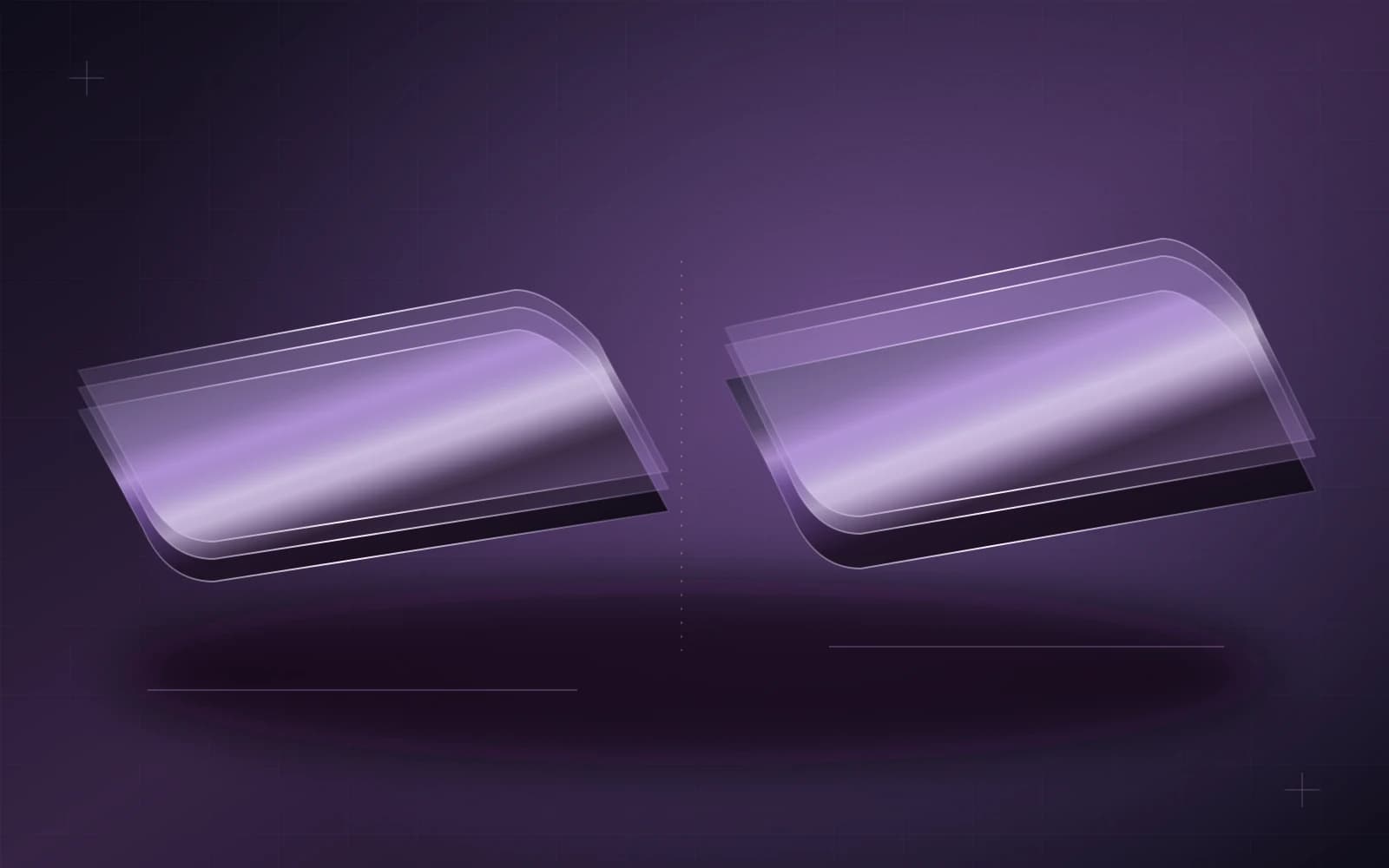
A small unit with a specific meaning
A mil is one thousandth of an inch. It is not a millimeter. In paint protection film specifications, mil is used to describe a very thin construction in a unit that keeps the numbers readable. Confusing the two units creates a large error before any product comparison has even begun.
For the current clear VIVID PPF range, VIVID PRO is documented at 7.5 mil and VIVID PRO MAX at 8.5 mil. Those are construction measurements. They tell you how thick the specified film is, but they do not independently tell you how much damage a vehicle can withstand.
Convert the units carefully
One inch equals 25.4 millimeters, so one mil equals 0.0254 millimeters, or 25.4 micrometers. The conversions below follow directly from that unit definition. They are arithmetic equivalents, not separate laboratory measurements of a sample.
| Construction | Mil | Millimeters | Micrometers |
|---|---|---|---|
| VIVID PRO | 7.5 | 0.1905 | 190.5 |
| VIVID PRO MAX | 8.5 | 0.2159 | 215.9 |
| Difference | 1.0 | 0.0254 | 25.4 |
A millimeter is written mm; a micrometer is commonly written µm. Keeping the unit visible matters in a quotation or specification table. A bare number such as “8.5 thickness” is incomplete and invites misunderstanding.
Ask what the thickness includes
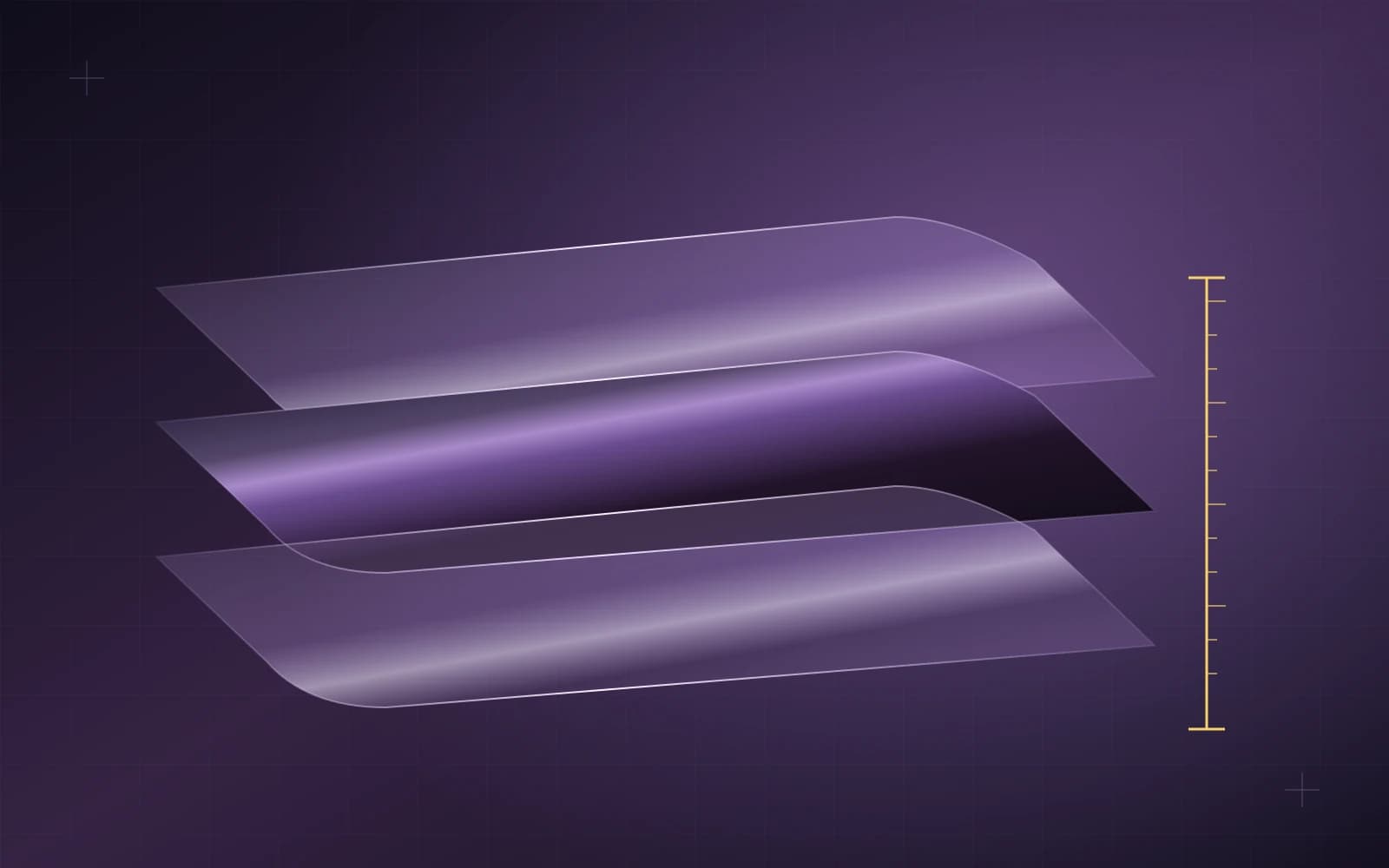
Film is a layered system. When comparing total thickness, establish which layers belong to the quoted construction. Do not compare an installed-film value for one product with a roll measurement that includes a removable liner for another.
The documented PRO construction is 0.5 mil top coat, 6.0 mil TPU core and 1.0 mil optical adhesive. These add to 7.5 mil. PRO MAX is 0.5 mil top coat, 7.0 mil TPU core and 1.0 mil optical adhesive, adding to 8.5 mil.
| Layer | PRO | PRO MAX |
|---|---|---|
| Top coat | 0.5 mil | 0.5 mil |
| TPU core | 6.0 mil | 7.0 mil |
| Optical adhesive | 1.0 mil | 1.0 mil |
| Total | 7.5 mil | 8.5 mil |
This breakdown shows where the difference sits: the TPU core. It is more useful than a larger total with no explanation. The Technology page presents the material layers visually, while the PRO vs PRO MAX guide connects construction to the wider specification.
More thickness is not a complete performance ranking
A film's behavior depends on its construction and properties, not thickness alone. Tensile strength, elongation, adhesion and surface characteristics answer different questions. Film thickness should be considered alongside them and alongside the purpose of the product.
PRO documents 45–55 MPa tensile strength, 300–400% elongation and 8–10 N/25 mm peel adhesion. PRO MAX documents 55–65 MPa, 350–450% and 9–11 N/25 mm respectively. These are additional pieces of the comparison. None should be silently converted into another kind of measurement.
For example, the ratio between 8.5 and 7.5 mil is approximately 1.133. That describes about 13.3% greater total thickness. It does not prove 13.3% greater stone-chip protection, a 13.3% longer service life or a fixed increase in impact energy resistance. Those would require their own evidence and defined test conditions.
Thickness does not choose the finish
A 7.5 mil film can have a different purpose from another 7.5 mil film. VIVID PRO MATTE™ is 7.5 mil with a matte visual objective. VIVID PRO SHIELD COLOR™ is 7.5 mil and combines protection with personalization. Their shared thickness does not make their appearance or handling instructions interchangeable.
Similarly, VIVID DUALFINISH™ has a documented 7.5–8.5 mil range and a distinct gloss-and-matte effect. A range should remain a range unless the exact selected material's specification establishes a particular value.
Choose the intended surface result first. Then use thickness and the rest of the documented specification to assess the product that actually delivers that result. Selecting a film solely because it has the largest number can ignore the owner's main objective.
Installation changes the practical context
A published construction thickness describes the material specification. Installation still requires it to conform to a real vehicle. Stretching and handling must follow the appropriate guidance so the finished film retains the intended appearance and performance characteristics.
Do not treat a high elongation figure as a recommended working stretch. PRO MATTE, for example, has a documented recommendation to keep stretch at no more than approximately 10–12% to reduce gloss spots. That illustrates why material test data and practical installation limits need separate explanations.
Coverage also matters. A thicker film on a limited area does not protect an uncovered panel. Ask the installer to list the exact coverage and edges, so the material selection can be evaluated against the full protection plan.
Keep durability and warranty in their own columns
Technical durability is another specification concept. PRO documents 7–10 years and PRO MAX 10 years. These figures must not be presented as universal commercial warranty periods. A commercial warranty has its own issuer, region, conditions and terms.
Nor should thickness be used to calculate a warranty or a replacement date. A vehicle's exposure, care and installation condition vary. Inspect the film when there is unusual damage or a change in appearance and follow the applicable care guidance rather than relying on a thickness number as a maintenance schedule.
A thickness value answers “how much material?” It does not by itself answer “how much real-world damage is prevented?”
A useful comparison checklist
Before making a decision, confirm the unit, the included layers, the exact product and finish, and the other relevant properties. Compare like with like. If a value is a range, retain the range. If a claim cannot be traced to the product specification, do not use arithmetic to invent it.
Explore VIVID PRO and VIVID PRO MAX, then bring a clear coverage brief to a professional consultation. The best use of thickness data is to support an informed material choice within a complete installation plan.