Read the metrics separately
VLT describes visible light transmission, IRR describes infrared rejection and TSER describes total solar energy rejected. They measure different things and should not be collapsed into one “heat reduction” number.
06 / Automotive Glass
Nano-Ceramic Automotive Glass Film
A non-metallic, signal-friendly nano-ceramic automotive glass film with documented VLT, infrared rejection, total solar energy rejection and UV rejection.
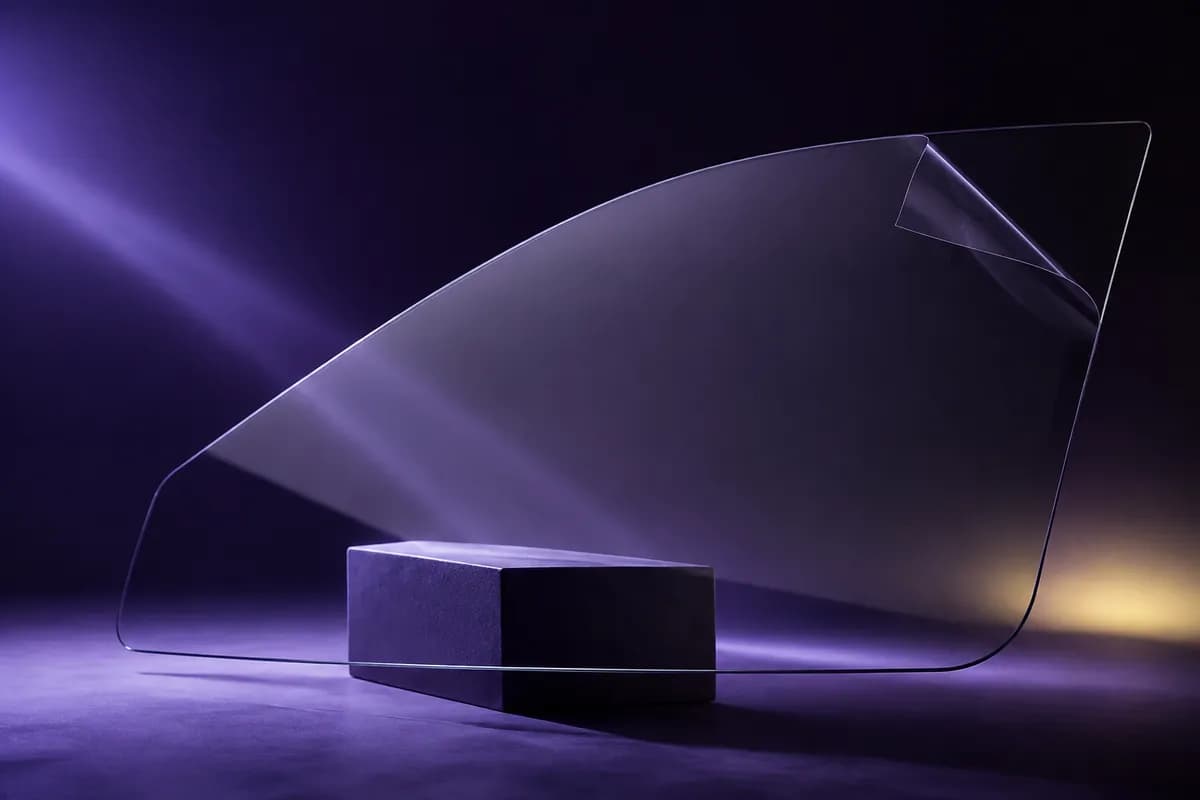
Material intention
COOLGUARD is the glass-film choice when documented solar metrics and non-metallic signal-friendly construction matter, with shade selected by the required visible-light transmission.
Read the glass-metrics guideVLT describes visible light transmission, IRR describes infrared rejection and TSER describes total solar energy rejected. They measure different things and should not be collapsed into one “heat reduction” number.
The nano-ceramic construction is documented as non-metallic and signal-friendly, avoiding claims that rely on a metallic layer.
The documented VLT range spans 5–70% depending on shade, so the right configuration should be chosen from the actual intended light-transmission target rather than a generic darkness description.
05 Optical intelligence
Three different questions. Three different measurements. Explore the documented VIVID COOLGUARD™ ranges.
The proportion of visible light that passes through. Lower VLT looks darker; it does not define total solar energy rejection.
The technical profile
Documented values for VIVID COOLGUARD™. Use the current technical sheet for complete application requirements.
IRR, TSER and VLT are separate metrics. Never convert IRR or TSER into an unsupported heat-reduction percentage.
The right application
The professional detail
Continue the collection