
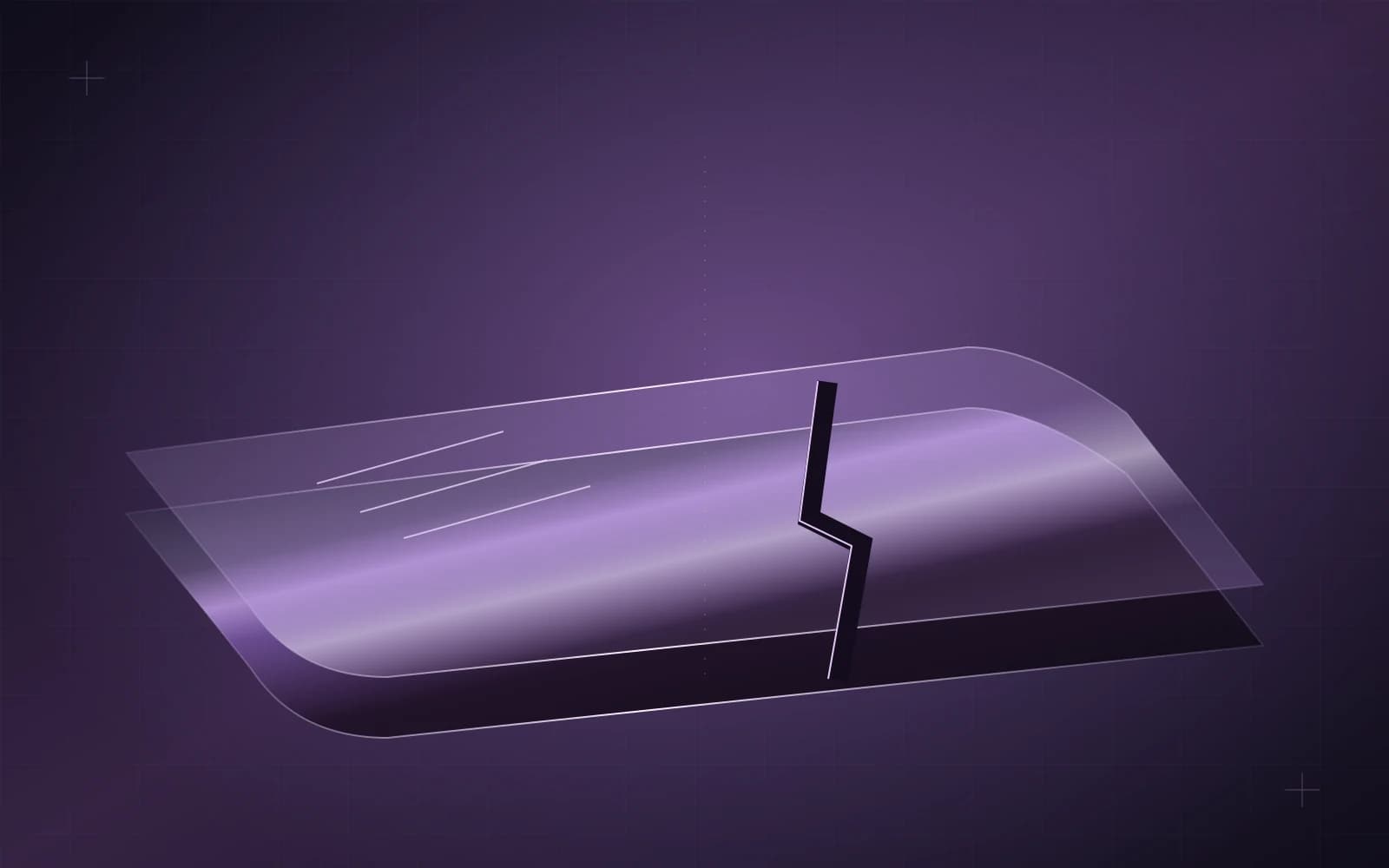
The important words are “light surface scratches”
Self-healing is a useful PPF feature when it is described precisely. In supported VIVID films, it refers to recovery from light surface scratches. It does not mean that a damaged sheet can rebuild missing material, close a deep cut or restore paint beneath a severe impact.
That boundary is central to good ownership decisions. A faint wash mark and a torn film edge may both be called a scratch in everyday conversation, but they are different kinds of damage. Before deciding whether a mark might recover, establish what happened and whether it is confined to the outer surface.
A surface response, not unlimited repair
The functional top coat is the outer layer exposed to washing and everyday contact. Fine surface deformation can become less visible under suitable conditions in a supported self-healing construction. The response is a characteristic of that surface system, not a substitute for the complete film's structural integrity.
Warmth may be part of the specified recovery conditions. Use the guidance for the actual product. This article does not assign a universal recovery time, temperature or heating method because those details should come from the applicable instructions, not from a generic demonstration or an unrelated film.
The product's documentation matters more than the label alone. Ask which film was installed and how its surface behavior is intended to be maintained. A receipt that says only “self-healing protection” is less useful than a record naming the exact product and providing its care instructions.
Separate the kinds of marks
| What you notice | What it may indicate | Sensible next step |
|---|---|---|
| Very fine surface marks after washing | Possible light top-coat scratches | Clean gently and follow the product's recovery guidance |
| Dirt or residue that resembles a scratch | Surface contamination | Identify and remove using compatible care methods |
| A sharp line after a significant impact | Possible cut or deeper damage | Arrange professional inspection |
| Lifted, split or missing film | A physical integrity issue | Have the affected area assessed |
| Damage visible beneath the film | Possible substrate damage | Ask the installer to inspect film and paint |
These are decision prompts, not a diagnosis from appearance alone. Lighting can make marks look deeper or shallower, and contamination can conceal damage. If the cause is uncertain, a professional inspection is more useful than repeated attempts to heat or polish the surface.
What self-healing does not promise
A deep cut separates material. A puncture passes into or through the film. A tear disrupts the sheet. Missing material is no longer present to form a continuous surface. None of these should be sold as routine self-healing events.
Likewise, the feature does not repair paint. If an impact has reached the substrate, the condition of the paint must be assessed separately. The presence of film may change what was exposed, but it does not guarantee that every impact stopped at the top coat.
This is why terms such as scratch-proof, stone-proof and zero damage are inappropriate. A film can provide a useful sacrificial surface while still being capable of damage. Realistic expectations make the feature easier to use correctly, not less valuable.
Avoid turning an inspection into an experiment
Do not keep increasing heat because a mark has not disappeared. An improvised heat gun, very hot water or an aggressive polishing process is not a universal diagnostic tool. Ask the installer for the approved method and stop when the damage falls outside its intended scope.
Also avoid rubbing a contaminated area dry to see whether a line will move. First establish a clean surface using suitable products and clean wash media. Introducing additional abrasion makes it harder to distinguish the original mark from damage created during inspection.
If professional evaluation is needed, record when the mark was noticed, the likely cause and any products already used on it. Clear photographs in ordinary light can help explain the issue, although they do not replace a physical inspection where depth or film integrity is uncertain.
Finish matters when interpreting a mark
A clear high-gloss surface, a matte surface and a textured finish do not display reflection in the same way. On matte film, a glossy patch may be a finish-consistency issue rather than a superficial scratch. On an expressive finish, a change with viewing angle may be part of the intended appearance.
VIVID PRO MATTE™ has a documented 5–10 GU matte gloss range and a working stretch recommendation of no more than approximately 10–12% to reduce gloss spots. Those details matter because surface appearance can be affected by how the film was handled, not only by how it was later washed.
For VIVID DUALFINISH™, gloss and matte effects change with light and angle. Evaluate a suspected defect with an understanding of the expected finish. Do not assume that polishing every less-reflective area is an appropriate correction.
Prevention still has a practical role
Self-healing does not make careful washing unnecessary. Use the selected film's maintenance instructions, keep wash media clean and avoid treating persistent contamination with random chemical combinations. Tell any detailer that the vehicle has film and identify the finish before work begins.
Inspect the film after unusual impacts or contact. A small damaged area can require a different response from ordinary surface marks. Address a lifted or torn edge through the installer rather than pulling it further to investigate the paint yourself.
For demanding environments, build a care routine around actual exposure. Dust, contamination and hot surfaces require thoughtful handling. The Hot-Climate Care guide explains how to make those decisions without inventing one fixed maintenance interval for every vehicle.
Ask for evidence that matches the claim
When shown a self-healing demonstration, ask what kind of mark was made, which exact film was used and what conditions were applied. A demonstration of a light surface scratch should stay a demonstration of that behavior. It should not become proof of resistance to a sharp impact, torn film or damaged paint.
Self-healing is a limited surface capability. Deep cuts, punctures, tears and missing material need assessment, even when the product supports recovery from fine surface scratches.
Review VIVID PRO and VIVID PRO MAX for their documented constructions, or read What Is PPF? for the wider layer system. A professional consultation should establish the selected material, approved care guidance and a clear route for inspecting damage.